
Soldering is a method of joining two or more metal parts using solder and heat to create a reliable conductive connection. It is a key process in the manufacturing of electronic circuits and an integral part of today’s electronics production. But what does this process look like in practice, and what should our customers know about it?
The assembly technology selected for a given product depends on the type of components used. The two main technologies are THT and SMT. This is the most important decision in the assembly and soldering process.
THT (Through-Hole Technology) involves components with wire leads that are inserted through holes in the PCB and soldered on the opposite side.
SMT (Surface Mount Technology) works with SMD (Surface Mount Devices) components, where small components are mounted directly onto the surface of the printed circuit board (PCB).
Each of these technologies requires a different manufacturing approach. Due to the ongoing miniaturization of electronic products, SMT technology is currently the dominant method. The recommended soldering system is also influenced by other important factors, such as whether the PCB is assembled on one or both sides.
Let us take a closer look at the specific soldering methods we use.
THT (Through-Hole Technology) involves components with wire leads that are inserted through holes in the PCB and soldered on the opposite side.
SMT (Surface Mount Technology) works with SMD (Surface Mount Devices) components, where small components are mounted directly onto the surface of the printed circuit board (PCB).
Each of these technologies requires a different manufacturing approach. Due to the ongoing miniaturization of electronic products, SMT technology is currently the dominant method. The recommended soldering system is also influenced by other important factors, such as whether the PCB is assembled on one or both sides.
Let us take a closer look at the specific soldering methods we use.
Selective Soldering (THT Components)
Selective soldering uses automated equipment to precisely apply solder only to specific areas of a PCB assembly. This method is ideal for small or complex components that are difficult to solder using traditional techniques. Selective soldering machines can also automatically solder double-sided PCBs, which is a significant advantage in automated production. In the past, such boards had to be soldered manually.
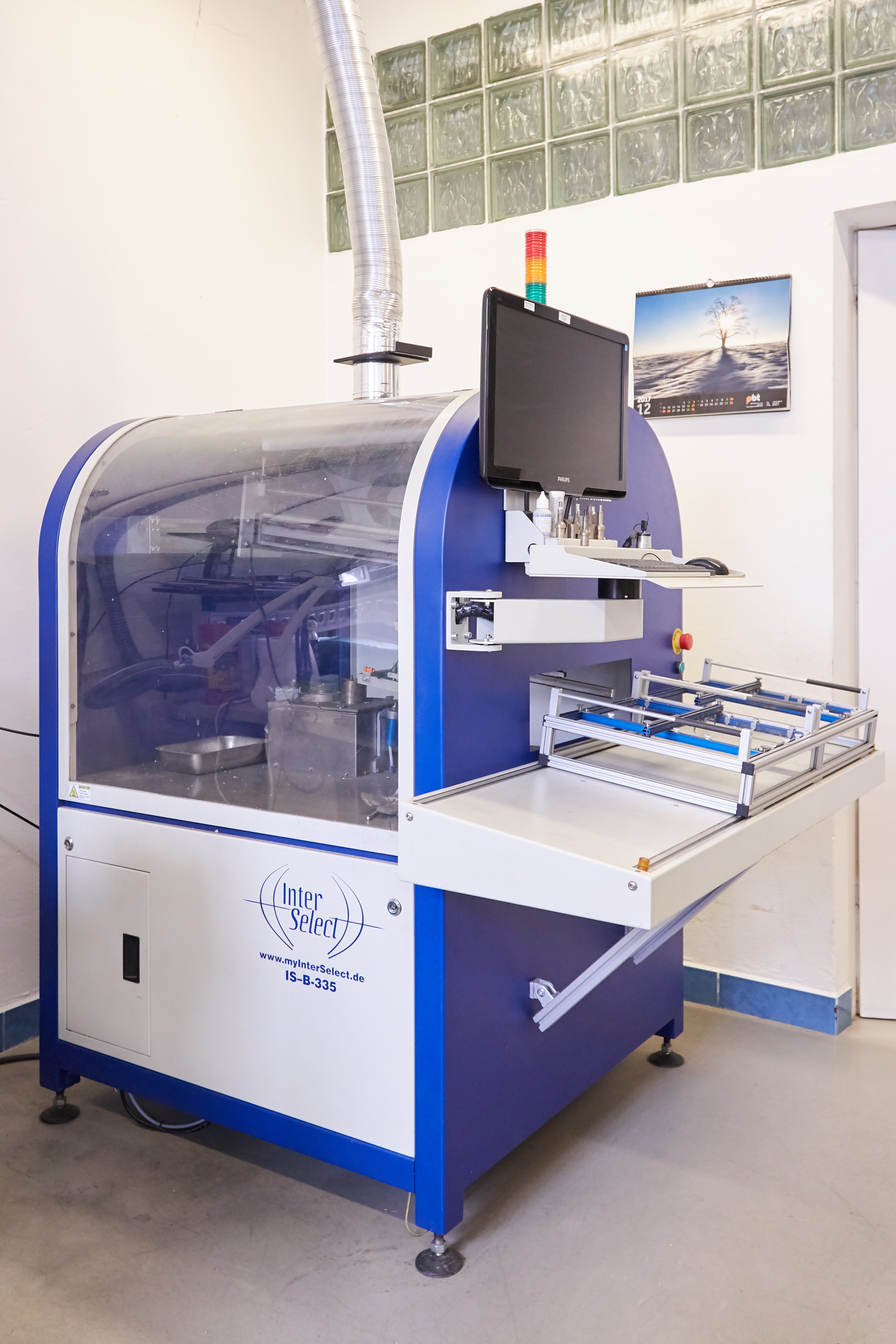

“For selective soldering in a nitrogen atmosphere, we use the fully programmable InterSelect IS-B-335S. This machine provides top-quality THT soldering and allows the selection of a wide range of nozzle sizes depending on the components used. As the technology name suggests, it enables precise spot application of flux followed by soldering. The PCBs are preheated with short-wave infrared, and the solder height, depth, and temperature are pre-programmed and continuously monitored throughout the assembly process.”
Wave Soldering
Wave soldering is another automated method used for THT components and is particularly suitable for high-volume production. The process consists of several stages. It begins with flux application, followed by controlled preheating of the PCB to ensure stress-free soldering. The boards then pass through the wave of molten solder across their entire width, with the solder joints formed in areas where the solder mask is exposed. SAFIRAL operates the SEHO SYSTEM 8140 PCS wave soldering machine, representing a lead-free soldering system. This equipment uses the SAC 305 alloy (tin-silver-copper).
Manual Soldering
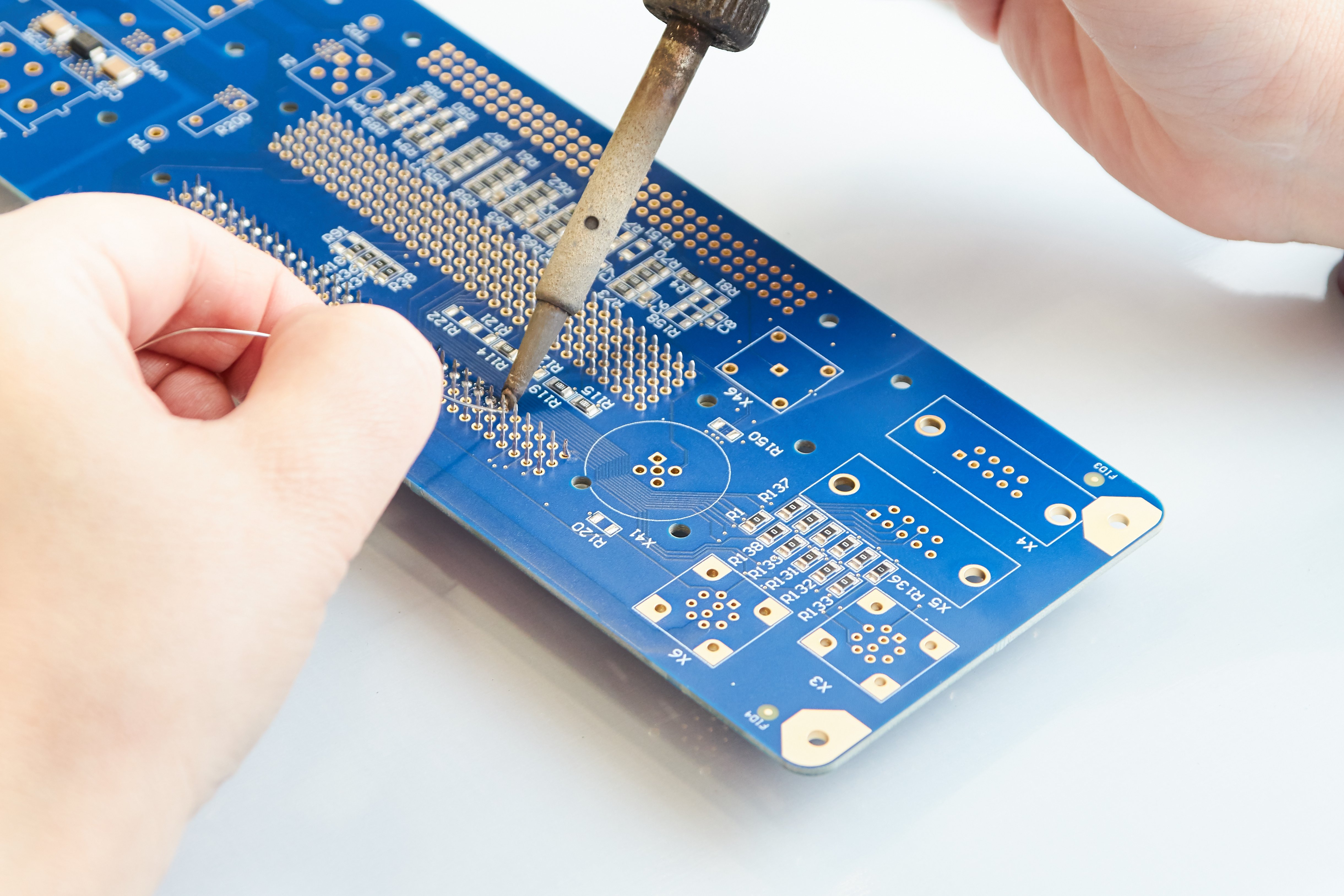
Manual soldering remains an important part of PCB assembly. It is performed by highly trained specialists using the same soldering principles described above, but with manual placement and solder application. Although manual soldering takes longer than automated processes, the results can often exceed production line standards thanks to the exceptional care and experience of our technicians. SAFIRAL operates two dedicated THT manual assembly workshops and fully equipped rework stations.
Reflow Soldering (SMT Technology)
Reflow soldering is the primary soldering method for SMT assemblies. It is mainly used for SMD components but can also accommodate larger components such as connectors or integrated circuits. This process requires highly precise temperature control to ensure reliable connections between the components and the PCB. The solder paste is heated in a controlled reflow oven profile, forming consistent and durable solder joints.
The soldering process is preceded by non-contact solder paste application and automated component placement. Within our inline automated production line, the following equipment is used sequentially: Mycronic JetPrinter MY600, Pick-and-place machine Mycronic MY200, Reflow oven SEHO GoReflow 2.3 or SMT Quatro Peek M

Micro Soldering
Micro soldering uses hot air or vapor-phase techniques to heat small components, enabling precise and delicate solder joints. This method often requires specialized tools such as hot air stations or vapor-phase systems capable of generating high temperatures quickly, ensuring proper solder melting without damaging surrounding components. Micro soldering is typically used for fine-pitch components, repairs, and highly demanding electronic assemblies.
Leaded and Lead-Free Soldering
In electronics manufacturing, the choice between leaded and lead-free solder is an important consideration. The decision depends on required quality standards, product performance expectations, and environmental regulations such as RoHS (Restriction of Hazardous Substances). In most countries, the use of lead is restricted due to its toxicity. However, exemptions still exist for specific industries such as medical and aerospace applications. SAFIRAL continues to offer both leaded and lead-free soldering options, depending on customer and regulatory requirements.
Regardless of the type of product — from complex electronics requiring micro soldering to large industrial assemblies using selective soldering — SAFIRAL selects the most suitable technological process to meet your specific needs.
If you have any specific technical questions, please feel free to contact our sales department. If your production requirements are already defined, you can also use our non-binding online inquiry form.